

Table of contents
Introduction
El radar de apertura sintética interferométrica (InSAR) por satélite ha evolucionado drásticamente desde principios de la década de 1990. Lo que comenzó como una herramienta científica especializada es ahora un método fiable y desplegado a nivel mundial para medir de forma remota la deformación del terreno en infraestructuras, terrenos naturales, activos críticos y más.
Su elegancia reside en su capacidad para detectar cambios sutiles (de hasta milímetros) desde cientos de kilómetros sobre la Tierra. Sin embargo, a pesar de su notable precisión, el InSAR se ha visto limitado durante mucho tiempo por varios factores que han frenado su pleno potencial.
Así pues, con el rápido crecimiento y la transformación del sector espacial, surge una pregunta: ¿están las constelaciones de satélites SAR pequeños preparadas para liberar todo el potencial del InSAR?
Es solo una fase
A lo largo de unas tres décadas, el InSAR ha progresado a través de varias fases definitorias. En la década de 1990, el InSAR diferencial (que, en aquel momento, era utilizado principalmente por la comunidad académica) arrojó nueva luz sobre la deformación asociada a riesgos naturales como eventos sísmicos y actividad volcánica. A principios de la década de 2000 se introdujo la interferometría de dispersores persistentes (PSI), lo que permitió una monitorización de series temporales más fiable y precisa, especialmente útil para medir cambios sutiles en zonas urbanas y otros activos artificiales. El lanzamiento de Sentinel-1(A) en 2014 cambió fundamentalmente el panorama desde la perspectiva de la obtención de imágenes por satélite, democratizando el acceso a los datos SAR mediante adquisiciones globales, rutinarias y gratuitas: un auténtico punto de inflexión en la historia reciente del sector. Más recientemente, la computación en la nube ha reducido los tiempos de procesamiento de semanas a horas, y la IA está acelerando la forma en que procesamos, clasificamos, consultamos e interpretamos los datos.
Pero más allá de estos avances recientes, ¿podría la próxima ola de innovación provenir de un segmento del sector satelital en rápido crecimiento: un ecosistema maduro de satélites SAR pequeños?
.webp)
Las limitaciones del SAR tradicional
Para entender la oportunidad, es importante revisar las limitaciones de los sistemas y arquitecturas SAR establecidos hoy en día.
La mayoría de los satélites SAR públicos y comerciales operan en órbitas heliosíncronas (SSO), viajando aproximadamente de norte a sur alrededor de la Tierra y obteniendo imágenes perpendiculares a su dirección de desplazamiento. Esta geometría introduce una limitación: el InSAR es en gran medida insensible a la deformación que tiende a producirse en dirección norte-sur. Para activos como taludes de minas a cielo abierto o terrenos naturales orientados en estas direcciones, esto crea un punto ciego en el InSAR que ni siquiera la combinación de imágenes ascendentes/descendentes puede mitigar más que parcialmente.
Una segunda limitación es la frecuencia de revisita. Las misiones SAR tradicionales operan como satélites independientes o pequeñas flotas, lo que significa días de retraso (a veces más) entre cada adquisición en la misma ubicación de la Tierra. Para riesgos que evolucionan rápidamente o deformaciones no lineales, estos intervalos de tiempo pueden dar lugar a un submuestreo y a una menor fidelidad de las mediciones. El InSAR destaca cuando el entorno que está capturando permanece coherente entre adquisiciones; los intervalos de tiempo largos pueden introducir ruido, descorrelación de la señal e incertidumbre derivada de los cambios en las características del terreno (naturales o artificiales). Cuanto más corto sea el intervalo de tiempo y la estrategia de satélite y adquisición adecuada para la aplicación en cuestión, mejor.
La revolución de los satélites pequeños
Una nueva generación de satélites SAR (satélites pequeños) de empresas consolidadas como Capella Space, ICEYE, PierSight, Umbra y Synspective, está redefiniendo lo que es posible en el ámbito del SAR. Sus constelaciones introducen varias ventajas que podrían abordar las limitaciones históricas del InSAR:
- Mayor resolución: Los satélites SAR pequeños modernos ofrecen imágenes a escala de metros o submetros, y Umbra alcanza resoluciones de hasta 16 cm. Para el InSAR, esto podría ofrecer redes de medición mucho más densas, un mejor desenrollado de fase y la capacidad de resolver características espaciales que actualmente son indistinguibles.
- Mayor escala y frecuencia de revisita: Las constelaciones de satélites permiten adquisiciones diarias o incluso varias veces al día en la misma ubicación de la Tierra. Unas tasas de revisita más rápidas reducen la descorrelación temporal (cambios entre imágenes), mejoran la fiabilidad de las mediciones y permiten que las series temporales de medición se generen a un ritmo mucho más rápido, lo que permite que los programas de monitorización comiencen antes de lo que es posible hoy en día.
- Programas de monitorización acelerados: Las técnicas de InSAR, como el PSI, requieren un número mínimo de imágenes (normalmente alrededor de 15) antes de que se puedan extraer de forma fiable las series temporales de deformación. Con un ciclo de revisita de 6 a 12 días, los satélites tradicionales tardan de tres a seis meses en alcanzar ese umbral. Las constelaciones de satélites pequeños tienen la capacidad de alcanzar el mismo número de imágenes en semanas, lo que permite que los programas de monitorización obtengan sus primeros resultados mucho antes de lo que es posible hoy en día.
- Nuevas geometrías orbitales: Algunos operadores de satélites, como Capella Space, han desplegado satélites en órbitas de inclinación media (MIO), no solo en órbitas sincrónicas con el sol (SSO), que es el estándar habitual del sector. Como resultado, las geometrías de imagen MIO abren la posibilidad de detectar deformaciones en sentido norte-sur.
- Mejora en la calidad y fidelidad de las medicionesUna mayor resolución y unos intervalos de adquisición más cortos reducen el tiempo disponible para que la cobertura del suelo u otras características cambien, lo que preserva la coherencia de la señal y permite redes de medición más detalladas y espacialmente contiguas. Unas adquisiciones de imágenes más frecuentes tienen el potencial de mejorar la fidelidad de las mediciones (por ejemplo, al capturar tendencias de deformación no lineales), acercándonos un paso más al monitoreo en tiempo real.
En conjunto, estos factores representarían un cambio fundamental, no solo una mejora incremental, en la forma en que el InSAR podría evolucionar y aplicarse de manera más amplia.
El gran obstáculo: órbitas precisas
A pesar de todas sus promesas, los sistemas SAR de satélites pequeños enfrentan un desafío importante: la precisión orbital.
El InSAR requiere que los satélites mantengan órbitas extremadamente consistentes y bien caracterizadas en cada órbita. Incluso pequeñas desviaciones pueden introducir errores de fase que afectan la capacidad de obtener una señal de deformación precisa, algo que es aún más crucial al construir series temporales de medición. Las misiones tradicionales de satélites SAR logran esto mediante grandes plataformas satelitales y sistemas de propulsión, receptores GNSS de alta precisión y amplias reservas de combustible.
Los satélites pequeños, por el contrario, operan bajo restricciones más estrictas de masa, energía y combustible.
Operating SAR satellites at the level required for interferometry comes down to maintaining extremely tight orbital repeatability — ensuring that every pass falls within a very narrow corridor in space. That demands two things: very accurate orbit determination, enabled by precise GPS and time synchronization with onboard systems, and the ability to manoeuvre effectively using onboard propulsion.
For small satellites, the hardest trade-off is that propulsion, mass, and power are all constrained, so every manoeuvre has to be both precise and fuel-efficient to preserve mission life.
.webp)
PierSight está construyendo una próxima constelación SAR centrada en la vigilancia marítima, diseñada para ofrecer visibilidad persistente y en cualquier condición meteorológica sobre océanos y regiones costeras. La empresa también forma parte de un consorcio de colaboración público-privada que trabaja para desarrollar y desplegar capacidades soberanas de satélites SAR, ayudando a ampliar el acceso a infraestructura estratégica de observación terrestre por radar.
A la altura del desafío
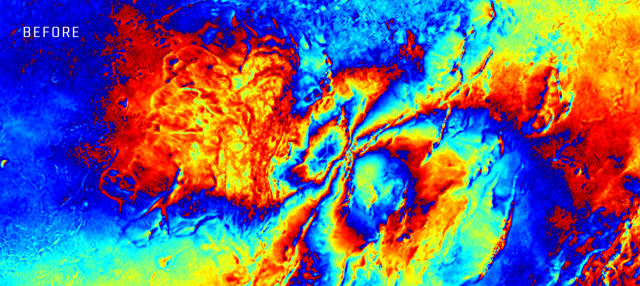
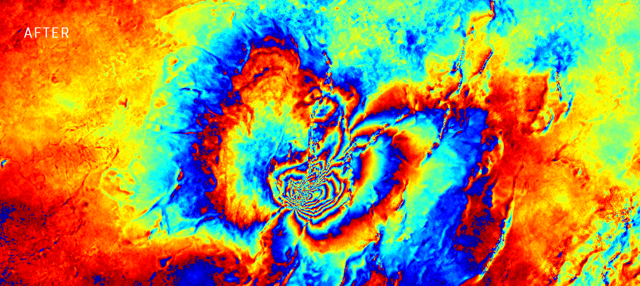
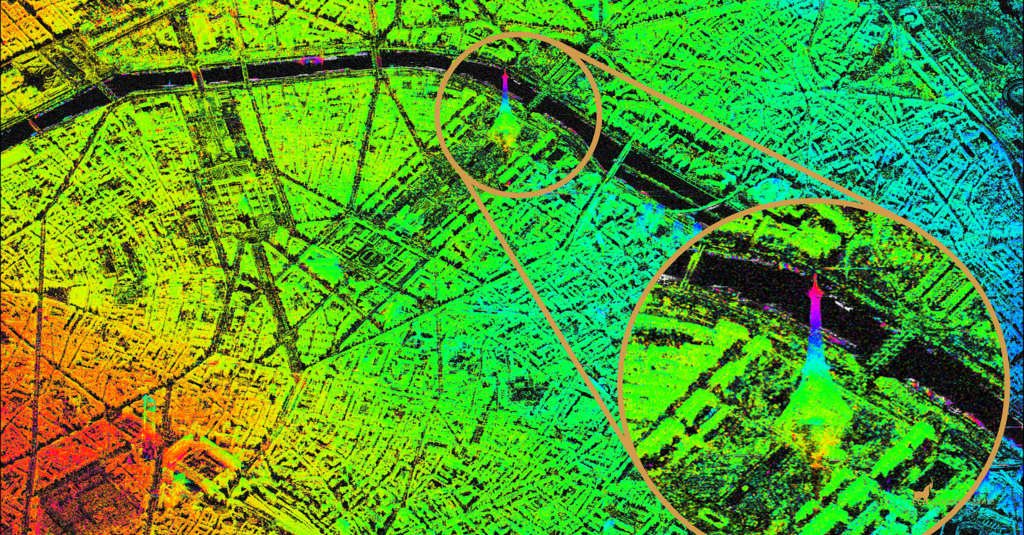
A pesar de estas limitaciones, recientemente se han demostrado algunos avances interesantes. ICEYE y Capella Space han mostrado públicamente interferogramas SAR generados a partir de adquisiciones de imágenes bien ajustadas (ver ejemplos a continuación). Algunos de estos han sido oportunistas (la geometría correcta, el momento adecuado, las condiciones precisas), pero señalan capacidad, progreso y un destello de potencial futuro.
La información del sector sugiere que los operadores de satélites pequeños están dedicando ahora más energía y recursos a habilitar una capacidad interferométrica rutinaria. Y esa es la clave: los datos compatibles con InSAR deben poder obtenerse en cada órbita durante toda la vida útil del satélite. Los usuarios finales dependen de mediciones predecibles y consistentes para el monitoreo operativo, y las oportunidades interferométricas ad hoc, aunque útiles, no son suficientes para aplicaciones críticas y programas de monitoreo robustos.
La oportunidad en el horizonte
Cerrar la brecha de precisión orbital supondría un cambio radical para todo el ecosistema InSAR. Gracias a la capacidad de observar una gama más amplia de fenómenos de deformación (con mayor frecuencia, mayor resolución y nueva sensibilidad geométrica), deberíamos ser testigos de una adopción más generalizada en diversos sectores, menos puntos ciegos en la detección de mediciones, estrategias de monitoreo más sólidas y tácticas, y una comprensión científica más profunda de los fenómenos de deformación complejos y los procesos de riesgos naturales.
El InSAR mediante satélites pequeños no solo ofrece mediciones más rápidas o visualmente atractivas; representa el potencial de un cambio fundamental en la forma en que monitoreamos el planeta: desde infraestructuras críticas y operaciones mineras hasta riesgos naturales y entornos urbanos.
El SAR mediante satélites pequeños puede cambiar lo que medimos y cómo nos informamos a escala de infraestructura. Cuando se revisa el mismo activo a diario (o con mayor frecuencia) y se mantiene una alta resolución, se deja de tratar el SAR como un contexto ocasional y se empieza a utilizar como una capa de datos operativos de riesgo. Para el monitoreo de infraestructuras hiperenfocado, especialmente aquellas en construcción o en operaciones diarias, existe el potencial de una detección de riesgos más temprana y ciclos de retroalimentación más estrechos.
- Rahul Anand, cofundador de KorrAI
Si se logran superar los desafíos técnicos y económicos (¡ni siquiera hemos mencionado el costo de estos datos en este artículo!), la recompensa para la comunidad InSAR y para los responsables de la toma de decisiones a nivel mundial podría ser profunda.
Para obtener más información sobre el estado actual de la tecnología InSAR y cómo puede satisfacer sus necesidades de monitoreo remoto, comuníquese con nosotros a contact@korrai.com
Share this post


Written By


Adam Thomas
Asesor Estratégico, KorrAI
Adam Thomas cuenta con más de dos décadas de experiencia en la intersección de la observación de la Tierra, la geociencia y la estrategia comercial. Como Asesor Estratégico en KorrAI, aprovecha una carrera que incluye Capella Space, Rio Tinto y Viridien para ayudar a las organizaciones a aplicar inteligencia geoespacial, incluyendo SAR, InSAR y GNSS, a desafíos de riesgo del mundo real.
.png)
Rahul Anand
CEO y cofundador
Rahul es el director ejecutivo y cofundador de KorrAI. Emprendedor en serie, anteriormente ha creado empresas exitosas en Internet de consumo e IoT. Ahora, se ha centrado en combatir el hundimiento del suelo, que se espera que afecte a más del 25% de la población mundial en las próximas décadas.
Written By

Team KorrAI

.png)

Suscríbase a nuestro boletín
De vez en cuando enviamos correos electrónicos con actualizaciones, nuestros últimos blogs y nuestras lecturas favoritas sobre InSAR y el lento paisaje del hundimiento del suelo.
Leído por los mejores profesionales en
.webp)


¡Uy! Algo salió mal al enviar el formulario.
.webp)


.svg)
.svg)
.svg)
2026 KorrAI. Todos los derechos reservados.
IA trazable para proyectos de miles de millones.
Suscríbase a nuestro boletín
De vez en cuando enviamos correos electrónicos con actualizaciones, nuestros últimos blogs y nuestras lecturas favoritas sobre InSAR y el lento paisaje del hundimiento del suelo.
Leído por los mejores profesionales en
¡Uy! Algo salió mal al enviar el formulario.